Livelihood
In the Sundarbans, livelihood is inseparable from ecology. Families earn from a braided economy—Aman paddy behind embankments, pond and brackish-water fisheries, river/creek fishing, crab collection/fattening, and forest-linked work like honey and wax. But every income source is “taxed by risk”: cyclones, embankment breaches, waterlogging, rising salinity, market volatility, and wildlife conflict. As local work shrinks after repeated shocks, seasonal and long-distance migration becomes a survival strategy.
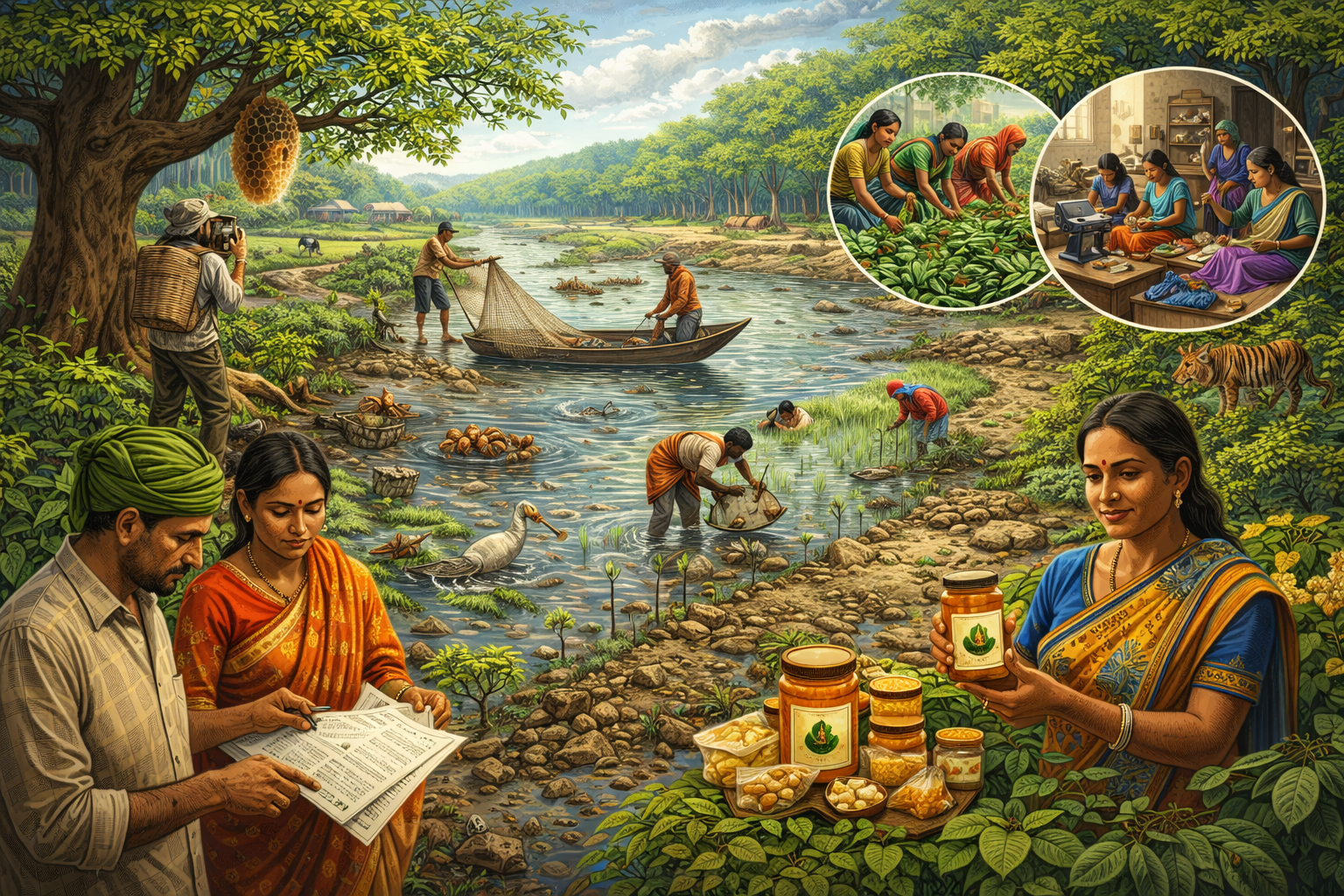
Our Livelihood Work Focuses On Climate-resilient And Dignified Options That Reduce Risky Dependence On Core Forest Zones While Strengthening Income:
- Salt-tolerant farming, organic vegetables, kitchen gardens.
- Integrated mangrove aquaculture (fish/crab with mangrove restoration).
- Honey value addition, safe packaging, and community branding.
- Skills for women and youth (stitching, crafts, green enterprises).
- Market linkages, fair returns, and disaster-ready livelihood planning.